
Let’s dive into 6 Digital Strategies for Lead Generation in 2026. Lead generation is the engine behind every sale your business makes. Yet, this key cog is usually forgotten about until sales pipeline runs dry.
Are you wondering why enquiries have slowed down or how competitors seem to have a steady stream of new customers? The answer usually comes down to which digital channels they are using and how well those channels work together.
This article walks through six digital lead generation strategies that consistently deliver results for South African businesses. Plus, we take a look at what has changed in recent years and how to know if your efforts are actually working.
What Is Lead Generation and Why It Matters
Lead generation is the process of attracting potential customers and capturing their interest. Usually, this is through a phone number, email address, or form submission, so your sales team can follow up.
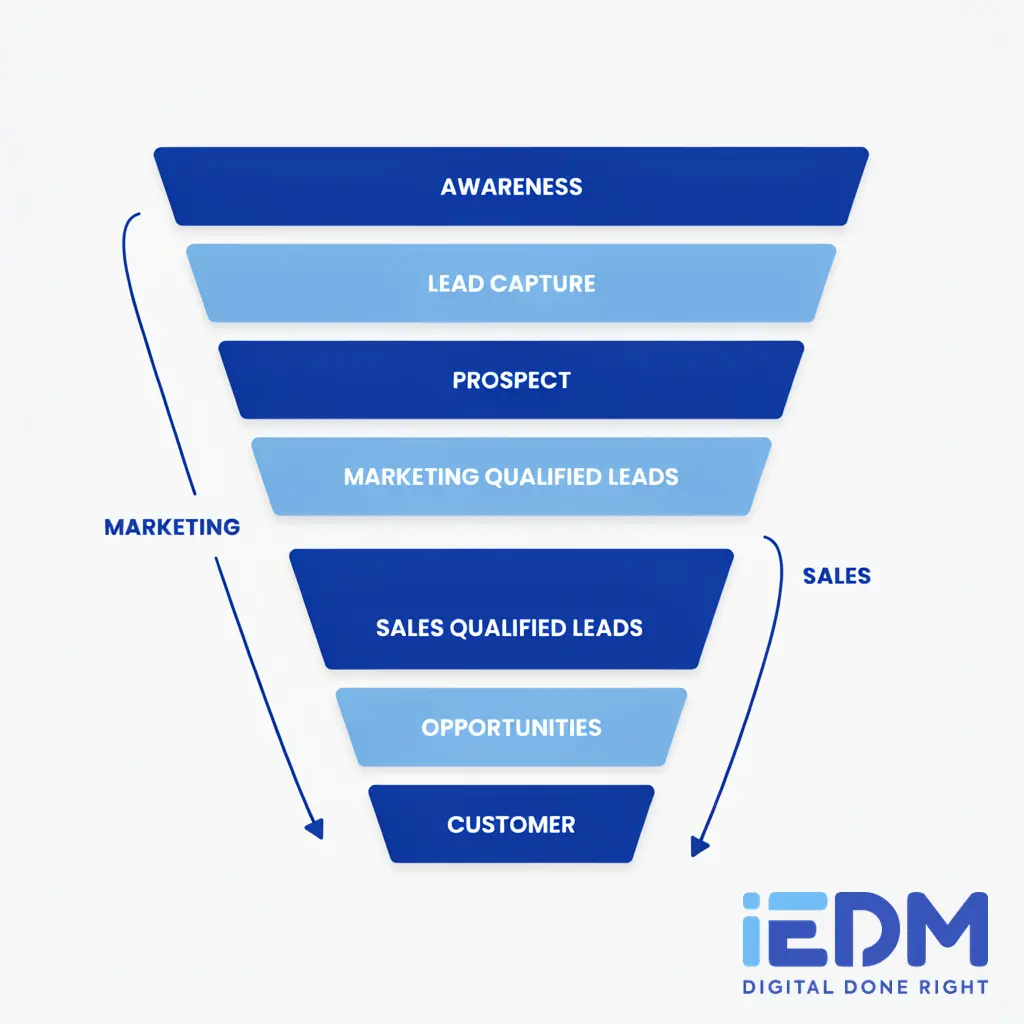
It sits at the top of the marketing funnel: before a sales-qualified lead becomes a paying customer.
Good lead generation matters because it replaces guesswork with a repeatable system. Instead of hoping the right person stumbles onto your website, you are deliberately putting your brand in front of people who are already searching for what you offer. Or, who fit the profile of your ideal customer.
This is what separates lead generation from cold outreach or advertising for the sake of visibility. A cold call interrupts someone’s day. A well-targeted Google ad or blog post meets them at the exact moment they are looking for a solution.
Six Lead Generation Strategies That Still Work
There is no single tactic that generates leads on its own. The businesses that grow consistently combine several of the following digital lead generation techniques, each supporting the others.
1.Your Website: The Foundation of Digital Lead Generation
Your website is still the centre point of your business’s online presence. It is often the first proper interaction a potential customer has with your brand. Thus, it needs to work like a digital handshake.
A cluttered, slow, or outdated site undoes the trust built by every ad and social post pointing people towards it. A website built for lead generation needs clear calls to action, fast load times on mobile, and a straightforward path from landing page to enquiry form.
If your site is not converting visitors into leads, no amount of traffic will fix that.
2.SEO: Long-Term Organic Lead Generation
Search engine optimisation remains one of the most reliable digital lead generation strategies because it targets people who are already searching for your products or services. Ranking organically for the right keywords means your website attracts visitors with genuine buying intent. This makes them far easier to convert into quality leads.
SEO takes longer to show results than paid advertising, but the payoff is a channel that keeps generating leads without an ongoing cost per click. For most South African businesses, a combination of:
- Local SEO
- Keyword-targeted content
- A technically sound website
This is the most cost-effective long-term lead generation strategy available.
3.Google Ads: Fast Digital Lead Generation Campaigns
Google Ads remains one of the quickest ways to put your business in front of people actively searching for what you sell. Unlike SEO, results are visible almost immediately. In turn, Google Ads is a strong option for businesses that need leads now rather than in six months.
The key to successful lead generation through Google Ads is precise targeting. Broad, poorly matched keywords waste budget on clicks that were never going to convert. A well-structured campaign, built around clear buyer intent and paired with a dedicated landing page, turns ad spend into qualified leads rather than expensive traffic.
4.Social Media Marketing: Organic and Paid Lead Generation Strategies
Social media marketing works differently depending on your audience. Facebook, Instagram and LinkedIn each reach people in different moods and with different intentions. So, your approach should match the platform.
Organic content builds familiarity and trust over time, while paid social advertising lets you reach a defined audience when they are more receptive to a message.
For B2B lead generation specifically, LinkedIn has become one of the strongest channels available. Think about it: decision-makers use it to research suppliers before they ever fill in a contact form.
For consumer-facing businesses, Facebook and Instagram advertising still perform well for driving quick enquiries and building a community around your brand.
5.Content Marketing: Building Authority That Generates Leads
Creating useful, relevant content positions your brand as a thought leader in your industry rather than just another company selling a product. Blog articles, guides, case studies and videos that answer real questions from your target market build trust over time and create top-of-mind awareness.
This means that when someone is ready to buy, your business is the one they remember. Like SEO, this is one of the slower lead generation techniques.But, it is also one of the most durable. Content you publish today can continue attracting and converting visitors for years.
6.Email Marketing: Nurturing Leads Into Customers
Never underestimate the humble email. Once someone becomes a lead, email marketing is how you nurture that relationship until they are ready to buy. Delivering the right message to the right person at the right time, rather than a generic blast to your whole list, is what turns a lukewarm enquiry into a sale.
An effective nurture sequence introduces your brand, shares something genuinely useful, and only then makes an offer. Businesses that skip the nurture step and go straight for the sale tend to see far lower conversion rates.
Personalisation, AEO and Brand Consistency for Lead Generation
The lead generation landscape has changed significantly. Three shifts matter most for South African businesses right now.
Personalisation and Lead Generation
The first is personalisation. Generic messaging no longer cuts through. Buyers expect the content, ads and emails they see to reflect their specific needs, industry or stage in the buying journey. Businesses that segment their audience and tailor their messaging accordingly see stronger engagement and higher quality leads than those sending the same message to everyone.
AEO and Lead Generation
The second is answer engine optimisation, or AEO. As more people use AI tools and voice search to find answers, businesses need their content structured to directly answer common questions.
Today, it isn’t enough to just rank for keywords. This means clear headings, concise answers, and content written to genuinely help the reader rather than simply target a search term.
Brand Consistency and Lead Generation
We can’t forget about brand consistency across every channel and touchpoint either. This has become non-negotiable. A potential customer might see your Google ad, visit your website, follow you on Instagram and receive a follow-up email… all within a single week.
If your tone, visuals or messaging feel disconnected across those touchpoints, trust erodes before a sale ever happens.
How to Improve Lead Quality
Generating leads is only half the equation. Businesses also need to know whether those leads are worth pursuing. This is where lead qualification comes in: sorting marketing qualified leads from sales qualified leads based on how ready they are to buy.
A few metrics worth tracking consistently:
- Website traffic and where it comes from
- Cost per lead across each channel
- Conversion rate from lead to customer
- Sales cycle length
- Which channels produce the highest quality, not just the highest volume, of leads
Tracking these numbers over time shows you which lead generation strategies deserve more budget and which need rethinking.
When it comes to tailoring your message to the right audience, digital marketing has a clear advantage over traditional media. Knowing exactly who you are speaking to eliminates wasted marketing spend and improves your return on investment.
Ready to see how these channels could work together for your business?
Frequently Asked Questions About Lead Generation
Lead generation is the process of attracting potential customers and capturing their contact details so a business can follow up and eventually convert them into paying customers.
Combining a strong, fast website with SEO, targeted Google Ads, active social media marketing, useful content and a consistent email nurture sequence is the most reliable way to increase leads online. Each channel supports the others rather than working in isolation.
Lead generation focuses on attracting and capturing interest from potential customers. Sales is the process that follows, where those leads are qualified, nurtured and ultimately converted into paying customers.
There is no single best channel for every business. SEO and content marketing tend to deliver the strongest long-term results, while Google Ads and social media advertising generate quicker results. The right combination depends on your industry, budget and target market.


