
Here are 8 ways to increase social media engagement and make it count. Most South African businesses are on social media.
Far fewer are getting meaningful social media engagement from it. If your posts are going out but the comments, shares, and conversations are not coming back, you are not alone.
This guide walks you through what engagement actually means, why it matters for your content strategy, and eight tactics that reliably move the needle.
Not sure if your current social media approach is working?
What Is Social Media Engagement?
Social media engagement is any interaction your audience has with your content on a social platform.
These interactions include:
- Likes
- Comments
- Shares
- Saves
- Link Clicks
- Mentions
- Direct Messages
It is not just a vanity metric, it is one of the clearest signals that your content is landing with the right people.
High engagement tells the social media algorithm that your content is worth showing to more people.
Low engagement has the opposite effect, quietly limiting your organic reach even when your follower count looks healthy.
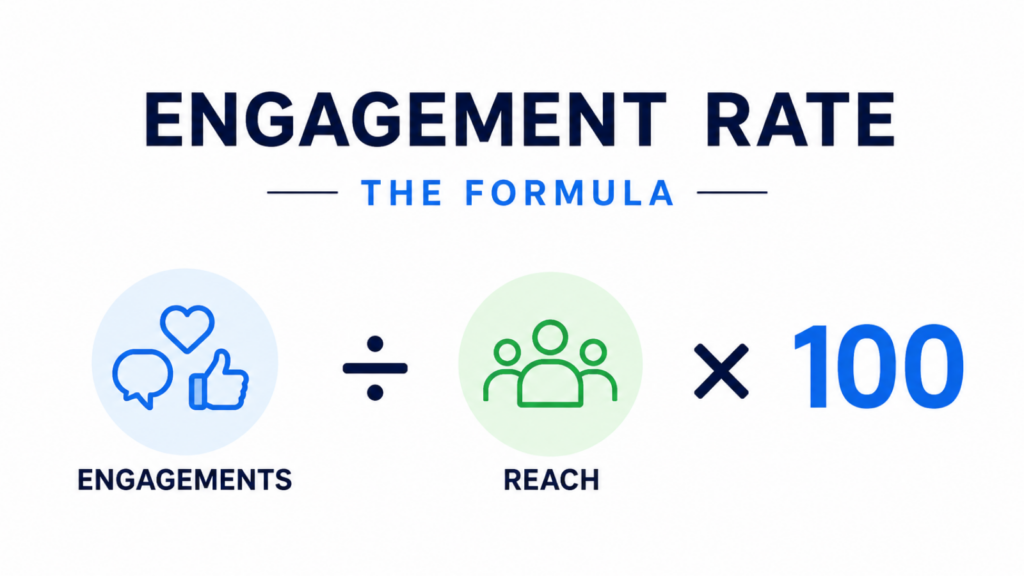
The Basic engagement rate formula is simple:
- Divide the number of engagements by your reach or impressions
- Multiply by one hundred.
A result above two per cent is considered strong across most platforms, though benchmarks vary by network and industry.
According to Socialinsider’s 2026 report, which analysed 70 million posts, TikTok leads all platforms with an engagement rate of 3.70%, up 49% year on year.
On the other hand, Instagram sits at 0.48% and Facebook has declined to 0.15%. These numbers vary by industry, but they give you a useful benchmark for calibrating expectations per platform.
Why Your Engagement Rate Matters More Than Your Follower Count
A large following with low engagement is a red flag, not a flex. It usually means your content is not connecting, your audience has gone passive, or your follower base includes people who are not genuinely interested in what you offer.
When your engagement rate is healthy, three things improve:
1. Content’s Organic Reach
Your organic reach grows because the algorithm rewards content that sparks interaction.
2. Streamlined Content Strategy
Your content strategy becomes easier to refine because you have real data on what your audience responds to.
3. Meaningful Interaction with your Audience
And your conversion rates tend to improve because engaged audiences are warmer, more trusting, and more likely to take action.
Tracking individual metrics like likes and shares is useful, but the most informed view comes from looking at a combination: engagement rate, account mentions, click-through rate, and reach together. This is how you spot patterns and adjust your strategy holistically.
8 Ways to Increase Your Social Media Engagement
1. Post When Your Audience Is Actually Online
Timing matters more than most businesses realise. Every major platform offers built-in analytics that show you when your specific followers are most active. Posting during those windows gives your content the best possible chance of being seen before the algorithm moves on.
Check your platform insights weekly and schedule your content accordingly. Saturday midday may work for one audience; Tuesday morning may be the sweet spot for another. There is no universal answer, so you need to look through your own data.
2. Start Conversations, Not Just Broadcasts
The brands that generate the most social media engagement are the ones that talk with their audience, not at them. Post with the intention of inviting a response. Ask questions, share opinions, and create content that gives people a reason to comment rather than just scroll past.
Comments carry significantly more algorithmic weight than likes, so they are worth actively encouraging. When someone does comment, respond promptly.
When someone gives feedback, acknowledge it. Consistency in your interactions signals to both the algorithm and your audience that there is a real presence behind the account.
3. Repurpose Content Across Platforms Strategically
One piece of content can work harder if you adapt it for different platforms rather than posting it identically everywhere.
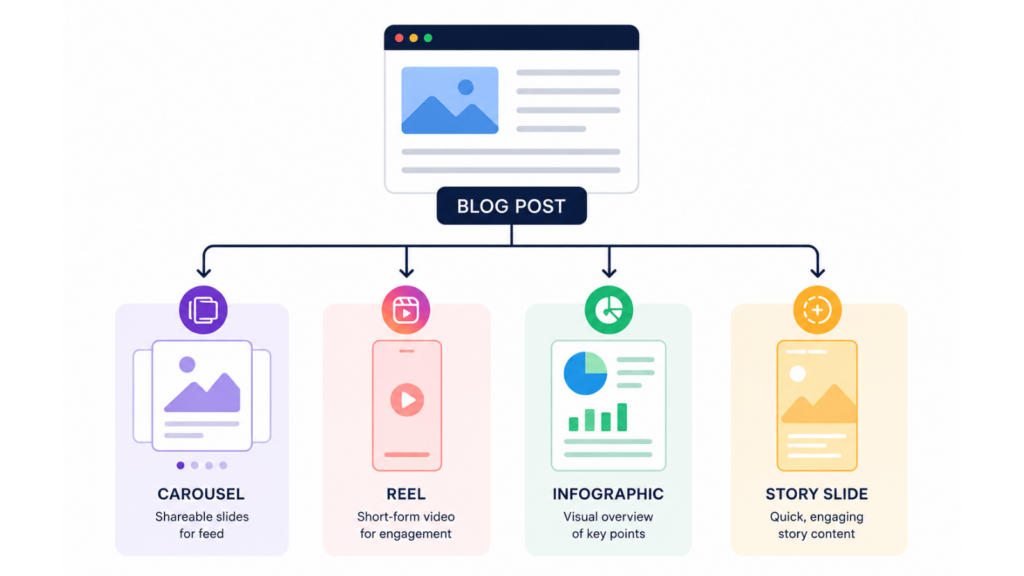
A blog post can become a carousel for LinkedIn, a short-form video for Instagram Reels, an infographic for Pinterest, or a series of story slides on Facebook.
This approach saves time while extending your organic reach across multiple channels. The key word is adapt. What works on LinkedIn in tone and format is rarely what works on Instagram. Match the format to the platform, and the platform to where your audience actually spends time.
4. Tag Partners, Clients, and Collaborators
When you publish content that references a client win, a supplier relationship, or a collaborative project, tag the relevant party. This extends your post’s reach to their audience at no additional cost and adds a layer of social proof that pure promotional content cannot achieve.
Shoutouts work well when they are genuine. A brief post celebrating a client milestone or acknowledging a partner’s contribution takes minutes to write and often generates strong engagement from both audiences.
5. Lead with Short-Form Video on Every Platform
Short-form video is no longer a trend. It is the primary format audiences engage with across TikTok, Instagram Reels, and YouTube Shorts. Reels, Shorts, and TikTok videos collectively account for 58% of time spent on social media, though average watch-through rates vary by platform.
That means platform-specific creative strategies essential rather than simply repurposing the same video everywhere. Posting the same video across every platform without adapting it is one of the most common mistakes brands make. Tailor your format, caption, and hook to each platform’s audience and algorithm.
6. Use Hashtags to Extend Your Reach
Hashtags remain a reliable tool for connecting your content with people who are not yet following you. They function as a content discovery mechanism. When used correctly, they put your posts in front of audiences who are actively searching for content in your niche.
Do the research before you post. Overly broad hashtags are saturated and competitive. Niche hashtags that are relevant to your industry and audience tend to deliver better-quality reach and more genuine engagement.
Aim for a mix of broad, mid-range, and niche tags depending on the platform.
7. Use AI to Assist, Not to Replace
AI tools can genuinely speed up content ideation, caption writing, and repurposing. However, transparency matters. 52% of social media users are concerned about brands posting AI-generated content without disclosure.
Nevertheless, 65% of consumers are comfortable with brands using AI for faster customer service on social media. Content identified by audiences as AI-generated sees a 12% engagement penalty on average, while AI-augmented content, where AI assists but the final output appears human-created, shows no measurable negative impact. Use AI as a co-pilot, not as a ghostwriter publishing without your voice behind it.
8. Use Analytics to Improve Your Content Strategy
Engagement does not improve by chance, it improves through iteration.
Most platforms give you detailed data on:
- What content performs
- When your audience is most active
- Who your audience actually is
- How they move from passive scrolling to active interaction.
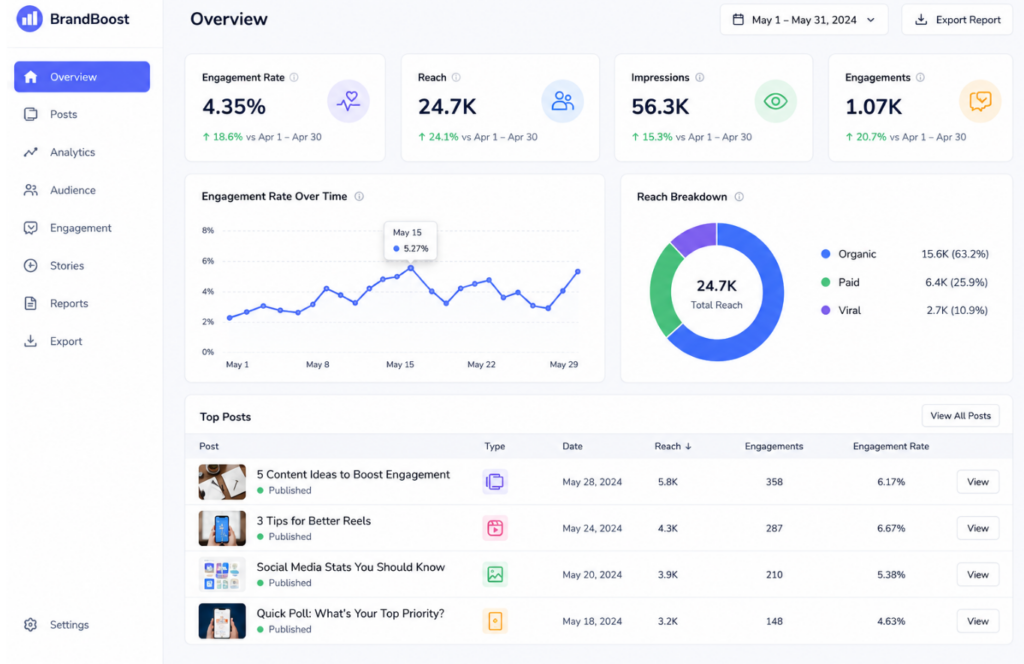
Review your analytics at least monthly. Look for patterns in your top-performing posts: is it the format, the topic, the time of day, or the tone? Build more of what works and phase out what consistently underperforms. A content strategy that is not informed by real data is just guessing.
Take the Guesswork Out of Social Media
Building consistent social media engagement takes a clear strategy, the right content, and the discipline to track what is working. If you are putting in the effort but not seeing the results, it is usually a strategy problem, not a platform problem.
IEDM works with South African businesses to build social media strategies that go beyond posting and hoping. From content planning, to analytics, to paid amplification when organic reach needs a boost.
Ready to get more from your social media?
Engagement rate benchmarks vary by platform. As a general guide, anything above two per cent is considered solid for most platforms.
The standard formula is: divide your total engagements (likes, comments, shares, saves) by your total reach or impressions, then multiply by one hundred to get a percentage.
Some marketers calculate engagement rate by followers instead of reach. Both are valid, as long as you use the same method consistently.
Video content, particularly short-form video, consistently drives strong engagement across most platforms.
Consistency matters more than volume. Posting regularly over an extended period outperforms bursts of activity followed by silence. General benchmarks suggest one to two times per day on Facebook, three to five times per week on Instagram, and one to two times per day on LinkedIn, but your own analytics should guide your posting frequency.
Reach measures how many people saw your content. Engagement measures how many of those people interacted with it.
High reach with low engagement suggests your content is being seen but not connecting.
High engagement relative to reach is a strong signal that your content is resonating, and that the algorithm is likely to reward it with more visibility.
A growing follower count with declining engagement usually means your new followers are not genuinely interested in your content. Or, that your content has drifted away from what attracted your original audience. It can also reflect algorithm changes that reduce organic reach.
Audit your recent content, revisit your content strategy, and focus on quality and relevance over follower growth as a primary metric.


