

You have built a good product, a decent website, and a checkout page that works. So why are people still abandoning their carts? In most cases, it is not your product. It’s trust. South African shoppers have grown wary of online stores after dealing with delayed deliveries, fake suppliers, and sites that disappear after taking payment.
So, before anyone buys from you, they are quietly checking whether you are safe to buy from at all. This matters more for small businesses than big retailers. A well-known brand has years of reputation working in its favour. A growing South African ecommerce store does not have that luxury yet.
That means every page, every policy, and every interaction has to do some of that trust-building work. The good news is that trusted online store experiences are built from a series of small, fixable details, not one big gesture.
Want a second opinion on where your store is losing customer confidence?
Why Customer Trust Matters for Every Online Store
People do not just buy a product when they shop online.
They buy confidence that :
- The product will arrive
- Their card details are safe
- Someone will help them if something goes wrong
Without that confidence, even the best-designed online store struggles to convert browsers into buyers.
The Shift in Online Trust
Two things have changed the way customers evaluate that confidence recently, and both are worth understanding if you want your online store to keep up.
1.Personalisation
Shoppers increasingly expect a store to recognise what they are looking for, whether that is through tailored product recommendations or relevant follow up communication. A generic, one size fits all experience now reads as less trustworthy than it used to.
2. The Rise of AI-Powered Search and Answer Engines
This is often referred to as answer engine optimisation or AEO. Customers are asking AI tools direct questions about whether a business is legitimate before they even land on your site.
This means your reviews, your policies, and your brand consistency across every channel now influence trust before a customer reaches your homepage.
Brand consistency ties both of these together. If your tone, pricing, and promises on social media do not match what customers find on your website, that mismatch is enough to make a cautious shopper turn back. A trustworthy ecommerce website tells the same story everywhere a customer finds it.
8 Ways to Boost Trust in Your Online Store
1. Fix the Small Website Issues That Quietly Break Trust
Small errors do more damage to ecommerce trust than most business owners realise, because customers read them as a sign of carelessness elsewhere. Before you spend money on driving traffic, walk through your own site as a stranger would and fix the following:
- Spelling and grammar mistakes
- Broken links or images that fail to load
- A cluttered or outdated design
- Slow page loading speed
- Confusing pricing or checkout steps
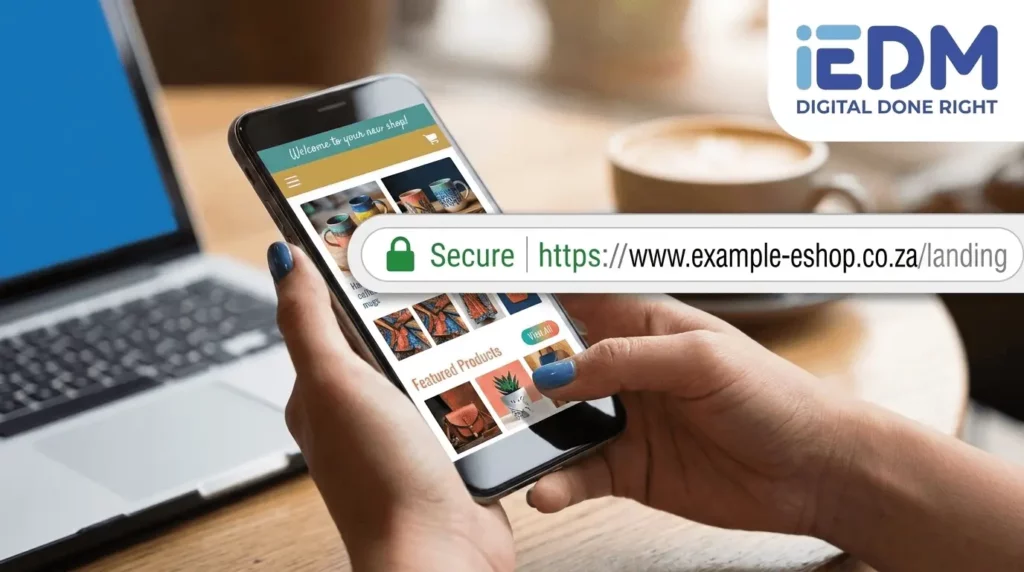
Alongside these basics, make sure your site runs on a valid SSL certificate. Customers may not know the technical term, but most recognise the small padlock icon in the browser bar.
Its absence is one of the fastest ways to lose a sale before it starts. Website security is no longer optional groundwork. It is one of the first website trust signals a cautious shopper looks for.
2. Rewrite Your About Us Page Around Your Customer, Not Your Brand
Your About us page is one of the most visited pages on any ecommerce site. Customers use it to decide whether your business is real and worth their money. The most common mistake is filling this page with achievements, awards, and company history while saying very little about the customer.
Flip that approach. Explain how your business solves a specific problem for the person reading the page, who you serve, and why you started. A short, honest story about why your store exists will do more for online customer trust than a list of milestones ever will.
3. Offer a Clear and Generous Return Policy
A confusing or hidden return policy is one of the biggest reasons shoppers abandon a purchase at the last step. A clear return policy reassures a hesitant buyer that you stand behind what you sell. It also signals confidence in your own product.
Build a dedicated returns and refunds page, written in plain language, and link to it from your product pages and footer. A simple FAQ style breakdown of how returns work, how long they take, and who covers shipping costs removes the guesswork that makes people abandon their cart.
4. Make It Easy to Talk to a Real Person
Live chat remains one of the fastest ways to build trust with online customers. It lets someone resolve a doubt in real time instead of abandoning the purchase to go searching for answers elsewhere. If a customer is unsure about sizing, delivery times, or stock availability, a quick chat response can be the difference between a sale and a lost customer.
If live chat is not realistic for your team right now, a simple WhatsApp Business number on your site achieves a similar result. Many South African shoppers are often more comfortable messaging than calling.
5. Give Detailed and Accurate Product Information
Customers are far more likely to buy a product they understand fully. Include specific details such as measurements, materials, ingredients, and warranty terms wherever they apply. Alongside this, back it up with clear photos or short videos that show the product from multiple angles.
Accuracy matters as much as detail. A mismatch between what is described online and what arrives at someone’s door is one of the fastest ways to destroy ecommerce trust. Often permanently, since a disappointed customer rarely gives a second chance.
6. Be Easy to Contact, On Every Channel
Display your contact details clearly, and make sure someone is actually responding to calls, emails, and messages within a reasonable time. Customers should never feel like they are shouting into an empty room.
This is also where brand consistency plays a role again. If a customer messages you on Instagram and gets a different tone or answer than they would get by email, it chips away at the confidence you have built elsewhere.
7. Collect and Display Genuine Customer Reviews
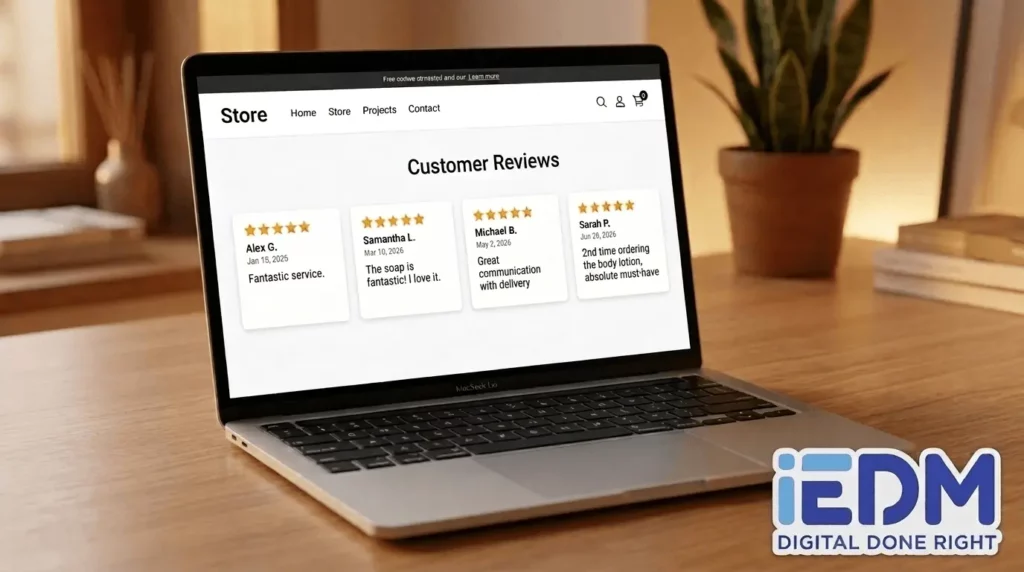
Social proof is one of the strongest trust signals an online store can have. Most shoppers check reviews on platforms such as Google Business Profiles, Facebook, or Hellopeter before deciding whether to buy from a business they do not already know.
Ask every customer for a review after a purchase, and make leaving one as simple as possible. Authentic reviews, including the occasional honest critical one, tend to build more credibility than a page of only five-star testimonials, because real shoppers expect some imperfection.
Respond to negative reviews calmly and publicly. How you handle a complaint in front of other customers often matters more than the complaint itself.
8. Show Visible Trust Badges and Secure Payment Options
Customers are naturally cautious about handing over card details to a business they have never used before. Security-focused plugins and badges, along with recognisable payment gateways such as PayFast, reassure shoppers that their information is encrypted and handled safely.
Offering more than one secure payment method also widens your reach. Remember, not every customer trusts or has access to the same payment option. Transparent pricing matters here too. Hidden delivery fees or surprise charges at checkout undo a lot of the trust your other efforts have built.
Ready to put some of this into practice?
How Trust Affects Your Ecommerce Conversion Rate
Every trust signal on this list ultimately serves one goal, which is improving your ecommerce conversion rate. A visitor who feels uncertain about your legitimacy will close the tab rather than risk their money. No matter how good your product photography is.
A visitor who feels confident, because your policies are clear, your reviews are genuine, and your site feels secure, is far more likely to complete the purchase.
Think of trust as removing friction rather than adding persuasion. You are not trying to convince someone to buy something they do not want. You are removing the doubts standing between a customer and a purchase they already want to make.
Build Trust in Your Online Store
Earning customer trust online is not a single fix. It is a digital marketing strategy made up of small, deliberate choices across your website, your policies, and how you show up across every channel your customers use.
Get those choices right, and a trusted online store experience becomes one of your strongest tools for converting visitors into loyal customers.
If you are a small business in South Africa wanting an honest look at where your store is losing customer confidence, contact our team at IEDM for a conversation about what is realistic to fix first. You can also browsemore digital marketing insights on our blog or see how we approach website design and ecommerce support.
FAQs About Building Trust in an Online Store
Customers trust an online store when:
- The website looks professional
- The pricing and policies are clear
- Contact details are easy to find
- Other shoppers have left genuine reviews
Security signals such as an SSL certificate and recognisable payment options also play a major role.
Fixing basic website errors, writing a clear and honest About Us page, responding quickly to messages, and asking happy customers for reviews.
Yes, they support a buying decision but work best alongside genuine reviews and clear policies.
Cart abandonment often happens when a customer reaches checkout and encounters:
- Unexpected costs
- An unclear return policy
- Limited payment options
These last minute doubts are usually about trust rather than price.


